抽象工厂模式(Abstract Factory Pattern)是围绕一个超级工厂创建其他工厂。该超级工厂又称为其他工厂的工厂。这种类型的设计模式属于创建型模式,它提供了一种创建对象的最佳方式。在抽象工厂模式中,接口是负责创建一个相关对象的工厂,不需要显式指定它们的类。每个生成的工厂都能按照工厂模式提供对象。
实现
我们将创建 Shape 和 Color 接口和实现这些接口的实体类。下一步是创建抽象工厂类 AbstractFactory*。接着定义工厂类 *ShapeFactory 和 ColorFactory,这两个工厂类都是扩展了 AbstractFactory。然后创建一个工厂创造器/生成器类 FactoryProducer。
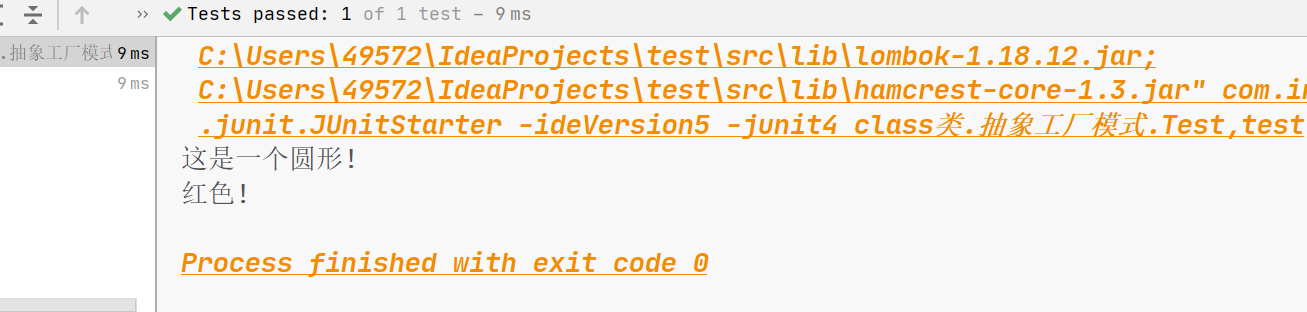
AbstractFactoryPatternDemo*,我们的演示类使用 *FactoryProducer 来获取 AbstractFactory 对象。它将向 AbstractFactory 传递形状信息 Shape(CIRCLE / RECTANGLE / SQUARE*),以便获取它所需对象的类型。同时它还向 *AbstractFactory 传递颜色信息 Color(RED / GREEN / BLUE),以便获取它所需对象的类型。
步骤1
为形状创建一个接口
1
2
3
4
5
6
7
8
9
10
| package class类.抽象工厂模式;
public interface Shape {
void draw();
}
|
步骤2
创建实现接口的实体类
1
2
3
4
5
6
7
8
9
10
11
12
| package class类.抽象工厂模式;
public class Rect implements Shape{
@Override
public void draw() {
System.out.println("这是一个矩形!");
}
}
|
1
2
3
4
5
6
7
8
9
10
11
12
| package class类.抽象工厂模式;
public class Square implements Shape{
@Override
public void draw() {
System.out.println("这是一个正方形!");
}
}
|
1
2
3
4
5
6
7
8
9
10
11
12
| package class类.抽象工厂模式;
public class Circle implements Shape{
@Override
public void draw() {
System.out.println("这是一个圆形!");
}
}
|
步骤3
为颜色创建一个接口
1
2
3
4
5
6
7
8
9
| package class类.抽象工厂模式;
public interface Color {
void fill();
}
|
步骤4
创建实现接口的实体类
1
2
3
4
5
6
7
8
9
10
11
12
| package class类.抽象工厂模式;
public class Red implements Color{
@Override
public void fill() {
System.out.println("红色!");
}
}
|
1
2
3
4
5
6
7
8
9
10
11
12
| package class类.抽象工厂模式;
public class Blue implements Color{
@Override
public void fill() {
System.out.println("蓝色!");
}
}
|
1
2
3
4
5
6
7
8
9
10
11
12
| package class类.抽象工厂模式;
public class Green implements Color{
@Override
public void fill() {
System.out.println("绿色!");
}
}
|
步骤5
为Color和Shape创建抽象工厂来获取工厂
1
2
3
4
5
6
7
8
9
10
| package class类.抽象工厂模式;
public abstract class AbstractFactory {
abstract Color getColor(String color);
abstract Shape getShape(String shape);
}
|
步骤6
创建扩展了 AbstractFactory 的工厂类,基于给定的信息生成实体类的对象。
1
2
3
4
5
6
7
8
9
10
11
12
13
14
15
16
17
18
19
20
21
22
23
24
25
26
27
| package class类.抽象工厂模式;
public class ShapeFactory extends AbstractFactory {
@Override
Color getColor(String color) {
return null;
}
@Override
Shape getShape(String shape) {
Shape shape1 = null;
if (shape.equalsIgnoreCase("CIRCLE")){
shape1 = new Circle();
}else if (shape.equalsIgnoreCase("RECT")){
shape1 = new Rect();
}else if (shape.equalsIgnoreCase("SQUARE")){
shape1 = new Square();
}else {
throw new RuntimeException("非法参数1!");
}
return shape1;
}
}
|
1
2
3
4
5
6
7
8
9
10
11
12
13
14
15
16
17
18
19
20
21
22
23
24
25
26
27
| package class类.抽象工厂模式;
public class ColorFactory extends AbstractFactory {
@Override
Color getColor(String color) {
Color color1 = null;
if (color.equalsIgnoreCase("RED")){
color1 = new Red();
}else if (color.equalsIgnoreCase("GREEN")){
color1 = new Green();
}else if (color.equalsIgnoreCase("BLUE")){
color1 = new Blue();
}else {
throw new RuntimeException("非法参数!");
}
return color1;
}
@Override
Shape getShape(String shape) {
return null;
}
}
|
步骤7
创建一个工厂创建器,通过传递形状或颜色信息来获取工厂
1
2
3
4
5
6
7
8
9
10
11
12
13
14
15
16
17
18
19
20
| package class类.抽象工厂模式;
public class FactoryProducer {
public static AbstractFactory getFactory(String type){
AbstractFactory factory = null;
if (type.equalsIgnoreCase("SHAPE")){
factory = new ShapeFactory();
}else if (type.equalsIgnoreCase("COLOR")){
factory = new ColorFactory();
}else {
throw new RuntimeException("非法参数!");
}
return factory;
}
}
|
步骤8
测试
1
2
3
4
5
6
7
8
9
10
11
12
13
14
15
16
17
18
19
20
21
22
| package class类.抽象工厂模式;
public class Test {
@org.junit.Test
public void test(){
AbstractFactory shapeFactory = FactoryProducer.getFactory("Shape");
Shape circle = shapeFactory.getShape("CIRCLE");
circle.draw();
AbstractFactory colorFactory = FactoryProducer.getFactory("Color");
Color red = colorFactory.getColor("RED");
red.fill();
}
}
|